In some industries (e.g. education, construction and manufacturing), it is essential for products to be labeled with a ”grade level” in order to categorize them according to quality, measures or performance standards specific. Whether you’re a student looking to understand the academic grading system, or an industry professional seeking more information about technical specifications – knowing what “15/20 grade” is, matters. Here, we take a look at what the mysterious 15/20 grade means and how it applies in different contexts.
What Does 15/20 Grade Mean?
It can be used as a measure to classify, where 20 possible points are given for each picture in particular. This Quick Grade system could sound a little more academic, but it can also be applied as product specifications in other industries as well.
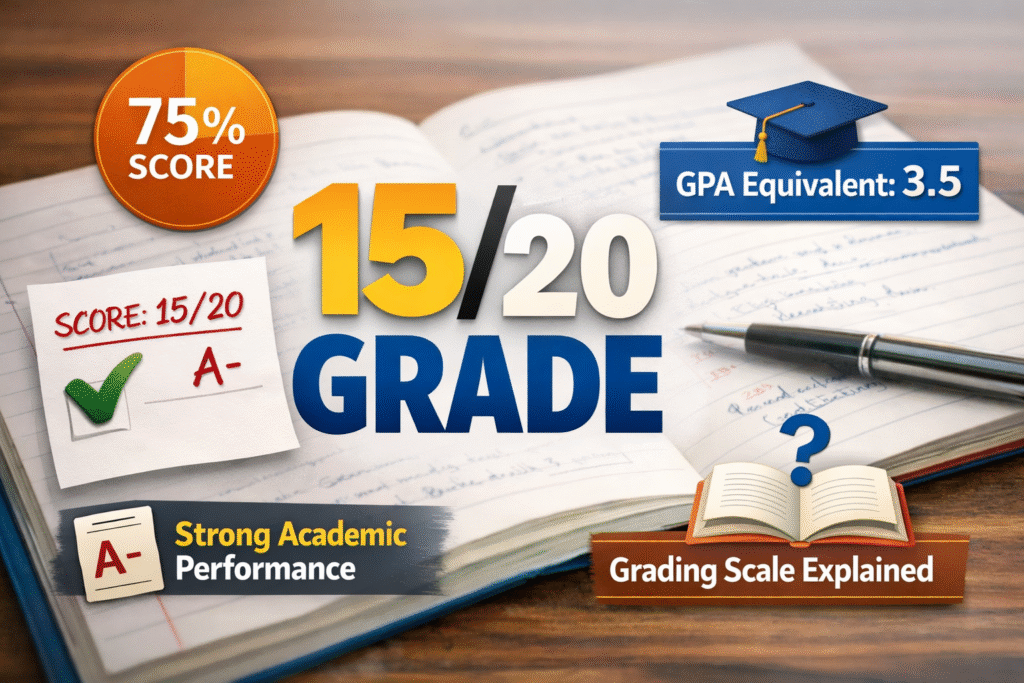
In Academic Grading A grade of 15/20 typically means that a student scored 15 points out of 20. Another difference, and this is in many countries, in France or other European countries with an educational system based on the 20-point grading scale. A 15/20 would be thought of as a good or above-average score, similar to getting a B or B+ at most school systems.
In Materials and Construction: It could also refer to grades of material, i.e. steel or concrete, or perhaps aggregates used in construction projects. For example, in concrete grading numbers could also mean the mix ratio or the material strength. In this situation understanding the details of a 15/20 grade means that the proper material is selected and employed to do the job, and meet safety and structural needs.
Why Is 15/20 So Important?
In school: A 15/20 grade is usually considered as good enough, the proof that it wasn’t a fluke that you know what most things are. Though not an ideal solution, it is a benchmark that represents some degree of competency and can be used to compare academic advancement. For students, 15/20 might be a target to guarantee some success but also feedback and improvement.
In Construction: With grading in construction, we get to know that the concrete – a 15/20 grade or such as other grade- is correctly balanced by paying attention while buying and using it, which will determine the longevity of any given structure. The right strength means the structure can bear the loads and environmental factors it will be exposed to, avoiding failure or safety issues.
How to increase your grade from a 15/20 in education
Here are some strategies if you’re looking to do better on the test — or take it to the next level with higher scores:
Review Your Work: Make sure that you are always referring back to your tests or assignments. Figure out where you dropped points and concentrate on those. Was it a lack of detail? A misunderstanding of key concepts? Knowing where you fell off lets you fix your holes.
Practice Makes Perfect: Whether it be problem-solving or essay writing, practice is the key. And if you have practiced, you will score better as much you will the more apply what all that knowledge and those skills have taught you.
Ask Questions: Do not be afraid to request explanations from your instructor about new concepts or extra material to ensure comprehension. Feedback is invaluable for improvement.
Be organized: Having your study stuff in order can help you use your time wisely and avoid stress. Make time to review, and don’t give in at the last minute with studying for tests, finishing assignments.
Applications of Grade 15/20 Typical Material Specifications
In production 15/20 grade is used to describe materials that are being used, a certain number also relates to specific usage. For example:
Steels: Some steel used in construction has a rating that indicates its strength and hardness; the “15/20” refers to an alloy, which ensures it’s hard enough to last through certain types of projects.
Concrete Grades A grade of 15/20 on a concrete column could mean the ratio of cement, sand, coarse aggregate and steel is 1:2:3:4:Number Of Bars * Area Reported In Square Inches = Cross Sectional Area (square inches). So, the standard value of the cube which is defined by the characteristic compressive strength of 15 N/mm2 at 28 days is usually obtain from whether a test result or using data given in literature. Builders choose this rating depending on how much weight the wall of a project must bear.
Conclusion
The 15/20 grade is so much more than a figure – it’s about quality, accomplishment and knowledge in multiple areas. If you are working towards academic success or in an industry that grades materials based on it’s strength and durability; then knowing what this grade means you can make an informed decision. Whether it’s a class assignment or just an exercise to learn a new skill, targeting a 15/20 is your first step toward reaching the minimum standards in your field.