Academic grading Grading in universities is by and large through percentages, and numbers are used to quantify the performance of students academically. So an 11/15 grade can deluge parents and students asking just what it means and how it stacks up to other scales. We will take a deep dive into what an 11/15 grade means and how it affects performance before we offer some solutions on ways to help boost this.
What Does the 11/15 Grade Mean?
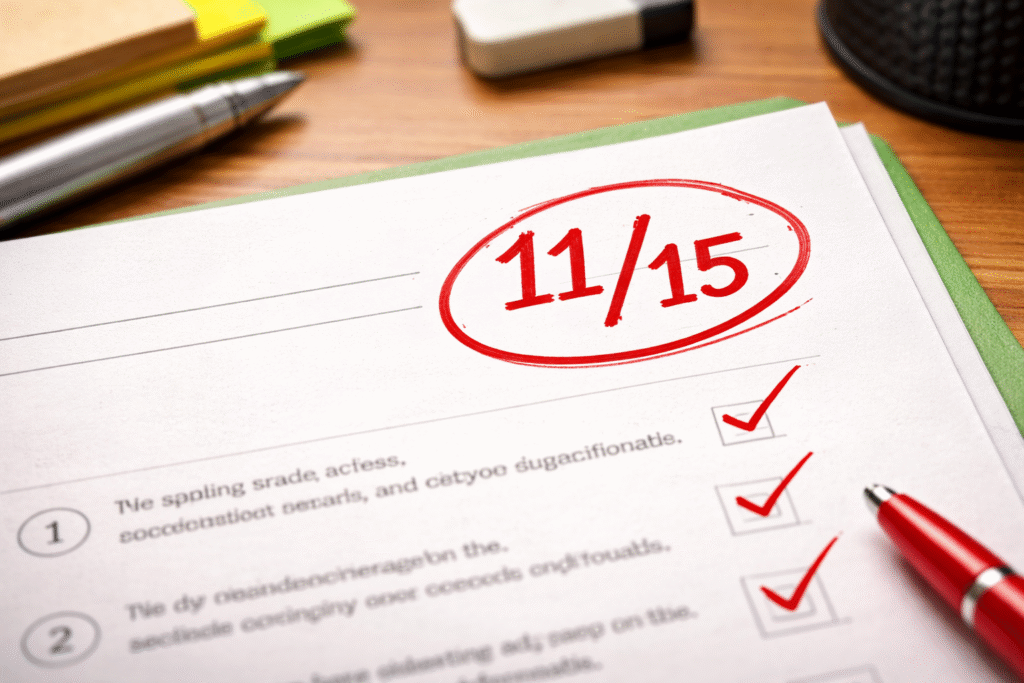
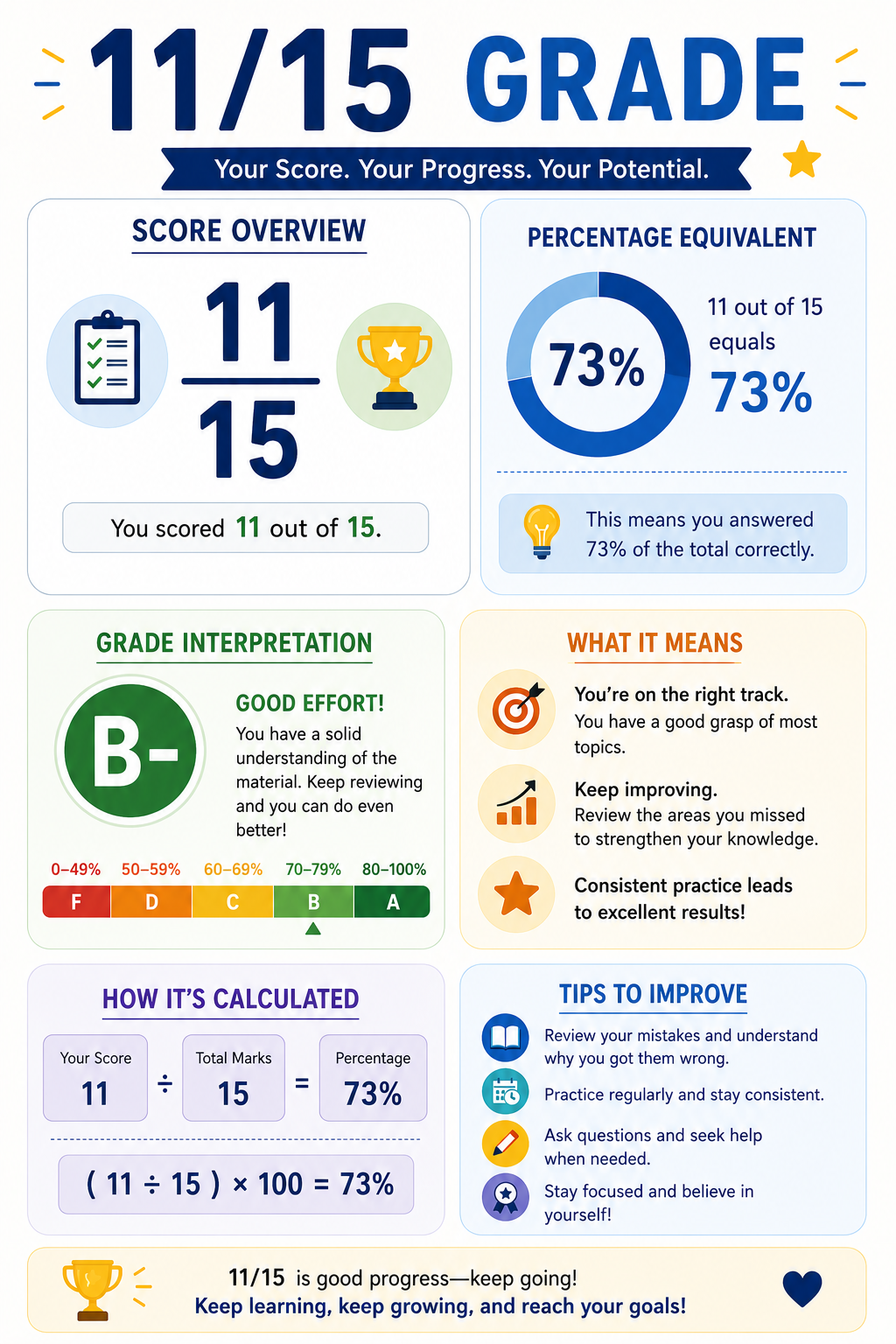
A mark of 11/15 is very common in systems that utilise number or fraction based scoring. 11 is the number of correct answers (or points) you answered/output out of a total 15. We’ll put this grade into perspective by following up with the percentage version:
1115×100=73.33%\frac{11}{15} \times 100 = 73.33\%1511×100=73.33%
A GPA of 73.33% is a C/C+ depending on the grading scale being used and the specific rules set out by your learning institution or course professor. While it is the grades many students believe to be satisfactory, they cannot help at much in extremely competitive academic settings. Once you know how to interpret that score in your context you can do better.
How the 11/15 Grade Fits into Academic Systems
An 11/15 grade can be interpreted differently in one system of education when compared to another. For example:
- In the US however 11 out of 15 would be around a C or C+ depending on what sort of grading system they had. A GPA of 73.33% is generally considered as a threshold to a satisfactory academic standing but could certainly be improved for an excellent admission prospect.
- In the UK, for example, grading is based on alphabetical letters and percentages but an 11/15 in a piece of coursework might be somewhere between a C grade showing sound performance.
- In some European, and most international systems (including the International Baccalaureate), the averages would be slightly lower but still near the average.
No matter the system, an 11/15 grade is still below average and there’s always some fire to be lit under your bottom if its success in future educational pursuits or selective programs such as college or scholarships that you’re after.
Why Percentage Conversion Matters for an 11 Out of 15 Score
Knowing what percentage 11 out of 15 represents can help you better understand your academic performance beyond the raw score. Since quizzes, assignments, and exams often have different total marks, converting your score into a percentage provides a standard way to compare results across multiple assessments.
A percentage score is also useful when estimating your overall course average. If several assignments contribute to your final grade, converting each one into a percentage makes it easier to calculate your progress and determine how future test scores could affect your overall performance.
Why an 11/15 Grade Might Not Be Enough
An 11/15, let’s call it passing might not be good enough if you have higher standards for academics. Here are some reasons that grade might not suffice:
- Academic criteria: Certain programs or scholarships might have minimum grade requirements – a B or above might suffice for eligibility. Not everyone MMA Spazz is 11/15 (73%) friendly, it would seem.
- Grade Rank: In particularly competitive scholastic systems, even earning a C+ can ruin your class rank. If other students are earning better scores then your 11/15 grade is sure to bring down your overall level in this section.
- Personal Goals: A great deal of students make personal goals involving making good grades, especially if they are at an institution pursuing further education or professional training. Doing better than 73% can move the party further toward those goals.
How to Improve an 11/15 Grade
If you’re aiming to improve your 11/15 grade to a higher level, several strategies can help. Here’s what you can do:
1. Review the Material Thoroughly
The number one reason for bad grades is, lack of comprehension. Go over material carefully, whether it’s textbook chapters, lecture notes or practice problems. Spend some extra time in learning for the new topics which were difficult and hunt down material elsewhere, online tutorials or extra reading.
2. Seek Feedback
Request feedback on your work from your instructor or teacher. Knowing where you went wrong can prevent similar errors on future tests. Interview your teachers Sometimes the teachers are great sources of tips for how one can do better on assignments or tests.
3. Participate in Class Discussions
Involvement can ELEVATE your comprehension of the subject matter. Participate in class discussion: ask questions, clear any doubts. You will also get in good with the teacher, who may decide to give you a little extra help or something you can work on for improvement.
4. Practice Regularly
Via homework, past exams or other exercises, practice is one of the best ways to advance your grades. Regular practice reinforces knowledge and strengthens memory under timed conditions, something particularly beneficial for exams.
5. Form Study Groups
Studying with friends can also be beneficial as it can offer you new perspectives to the same material. You can talk about difficult subjects, share notes and quiz each other. Sometimes teaching something to other people can help you understand even better.
6. Utilize Academic Resources
A lot of schools provide other academic services, such as tutoring, study groups or learning centers. Use these resources to supplement your knowledge on the matter. You may also discover online forums or courses with more in-depth explanations.
7. Manage Your Time Effectively
The right timing affects academic performance so much. Make a study plan that chunks your studies into pieces. Assignments Focus on your tasks and study ahead of tests. Procrastination can result in rushed work and lower grades, so be on top of due dates.
Conclusion
An 11/15 mark is acceptable average score. This is about a 73%, generally a C or C+ in most classes. Passable, but room for growth. Students can have their grades improved by spending time to better comprehend the material, participating in class discussions and asking for feedback on how they’re progressing; as well as practicing regularly to ensure they are meeting academic expectations. “Get better and get good” is something to aspire for in your quest of obtaining an education!
Frequently Asked Questions
What is 11 out of 15 as a percentage?
11 out of 15 equals approximately 73.33%. Divide 11 by 15 and multiply the result by 100 to calculate the percentage.
Is 11 out of 15 a passing grade?
In many grading systems, 73.33% is considered a passing score. However, the minimum passing percentage varies between schools and educational institutions.
What letter grade is 11 out of 15?
A score of 73.33% is commonly equivalent to a C grade in many grading scales, although some schools may classify it differently.
Why should I convert 11 out of 15 into a percentage?
Converting your score into a percentage makes it easier to compare different tests, monitor your academic progress, and understand grading requirements.
Can the percentage for 11 out of 15 change?
No. The mathematical percentage is always 73.33%, but the corresponding letter grade or GPA may differ depending on your school’s grading policy.