The Grading scale is a part of the academic system throughout the world. It standardizes the measurement of a student’s performance—making it possible for educators, students, and institutions to measure and compare academic achievements. In this guide, we’re going to look at various types of grade scales, how they function, and why they are key in the world of education.
What is a Grade Scale?
A rating scale is a scale developed to measure attitudes, opinions, or a set of characteristics in a valid manner. It’s usually composed of letters (A, B, C etc.) or numerical values (1-100) that indicate their output quality. Schools and countries may work with slightly different grade systems, but the main goal and purpose of the scale is to assess students’ level of academic knowledge.
Types of Grade Scales
Letter Grade Scale This is the most common grading system used in the United States. Quick Grade are represented by letters (A, B, C, D- F). It can also include pluses and minuses (each letter, for example A+, B-) to allow greater precision.
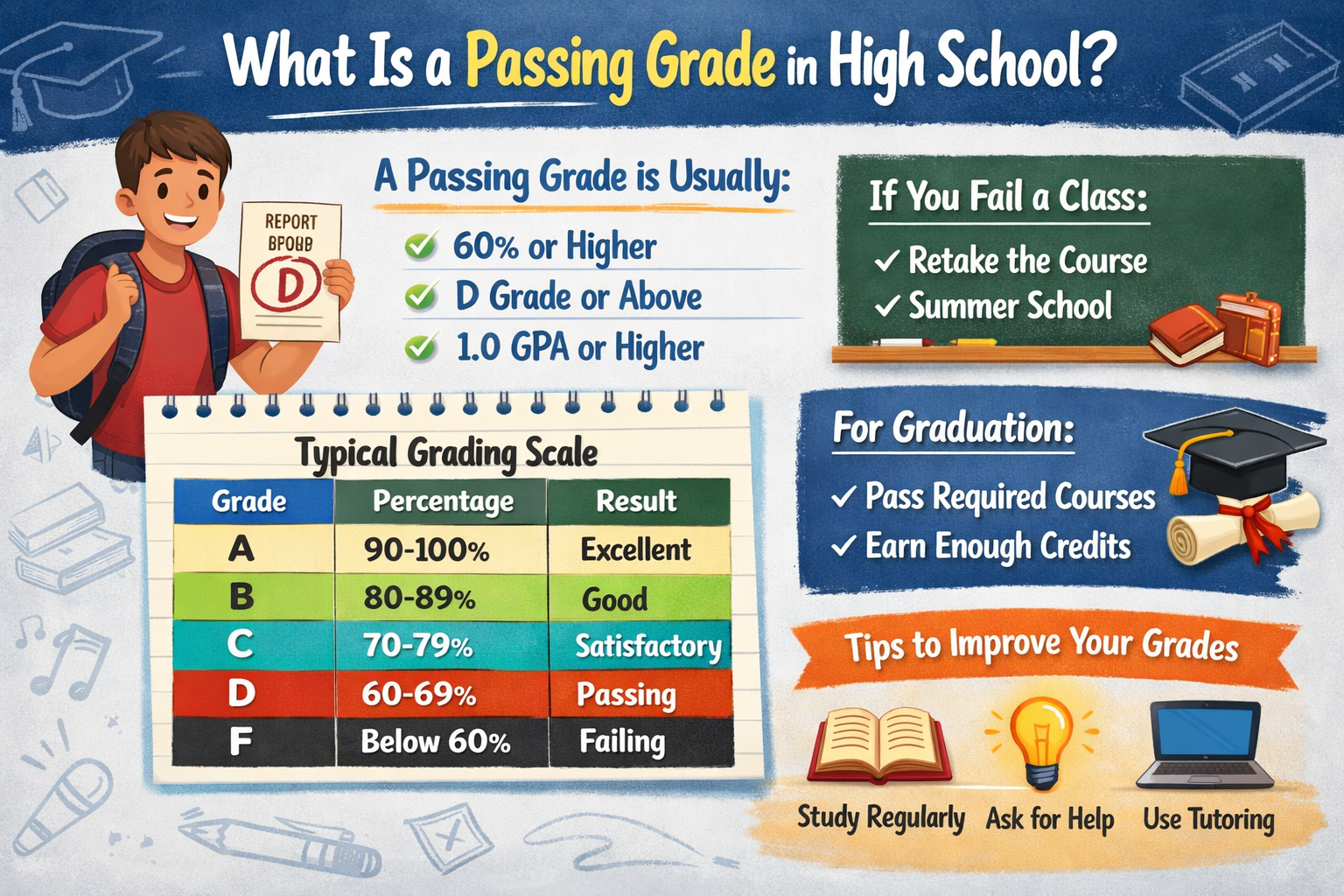
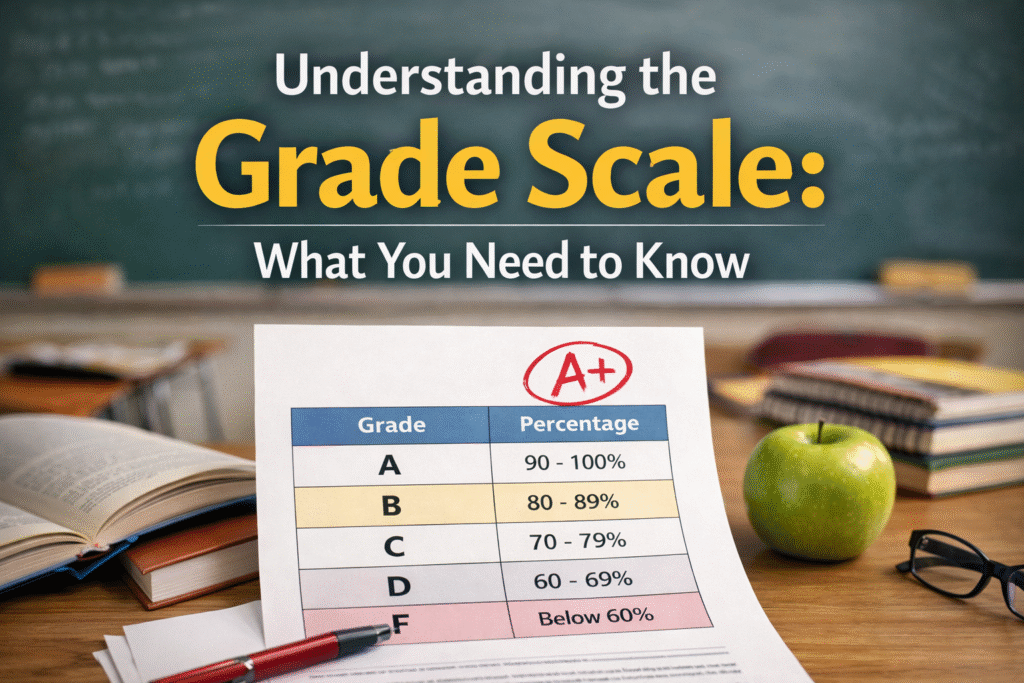
A (Excellent) – 90-100%
B (Good) – 80-89%
C (Average) – 70-79%
D (Below Average) – 60-69%
F (Fail) – Below 60%
Percent Scale The percent scale is simply that grades are awarded according to the portion of correct answers or total possible score. This is a pattern that exists in many educational systems, and increasingly so at University.”
A = 90-100%
B = 80-89%
C = 70-79%
D = 60-69%
F = Below 60%
4.0 Scale (GPA Standard) Most commonly used in the US the GPA system utilizes a 0 to 4.0 point scale with letter representations such as A and B, where an A is a 4-point grade and a B is a 3-point score. A number equivalent to each letter grade is utilized in computing the GPA.
A = 4.0
B = 3.0
C = 2.0
D = 1.0
F = 0.0
European Credit Transfer System (ECTS) It’s used in Europe to exchange grades across countries and institutions. The grades will be as:
A (Excellent) – 90-100%
B (Good) – 80-89%
C (Satisfactory) – 70-79%
D (Pass) – 60-69%
F (Fail) – Below 60%
Why Grade Scales Matter
Grading scales are also the most widely used method for performance measurement and academic assessment. They enable colleges, employers and scholarship-granting organizations to make valid comparisons between applicants through examination of their academic records.
Also Read: 15/20 Grade
Consistency and Fairness
A uniform grading scale provides a consistent assessment for all students, regardless of the course, subject, or teacher. It helps to hold academic assessment fair, and gives students the chance to compete fairly.
Clear Expectations Grade scales give clear expectations for students. These are important for students to know so that they can orient their work around how they’re going to be measured as successful or unsuccessful at meeting the benchmarks of performance.
College Admissions and Employment Prospects Grade scales are used as standards for college admissions to which applicants’ academic histories are compared. Good grades, especially in critical courses, are often the linchpin of getting admitted to competitive educational institutions. Employers also commonly use GPA as a gauge of how well a candidate can perform and endure in academic environments.
Worldwide acceptance Knowing how to understand and convert grading systems is most useful for students studying abroad. Systems such as ECTS assist the conversion of grades to other countries’ educational standards, moving participants through schools, businesses, and the rest of life across borders.
Differences between Multiple Grading Scale Conversions
Different grading systems are used around the world and many students have to convert their grades between different scales. Here’s a quick guide to translating between two of the most common systems:
Letter to GPA (4.0 Scale):
A = 4.0
B = 3.0
C = 2.0
D = 1.0
F = 0.0
Percentage to Letter Grade:
90-100% = A
80-89% = B
70-79% = C
60-69% = D
Below 60% = F
Conversions tools and charts are also at the disposal of pupils, educators and schools to easily shift from one grading scale to another.
Common Misconceptions About Grade Scales
A Grade Scale Equals Ability
As such, there is a common misbelief that the grade scale of a student (i.e., their GPA) directly relates to how intelligent or successful they may be in the future. Grades are a measure of academic performance, but they do not evaluate students’ creativity, problem-solving skills or other important qualities.
Grade Inflation Is Universal
Grade inflation, when grades are given more generously than in the past, is also a concern; some would argue that grade inflation is relatively pervasive across higher education. But grading policies vary from school to school, and the bar usually is modified to meet difficulty and academic standards.
International Grades Are Always Comparable
Grading systems are not always equivalent between nations (because of various grading scale), and even within a nation the same grading system may be used differently in different institutions or education stages. It could be true that you may have to adjust grades considering academic level of difficulty or looking at culture and the way academics look are evaluated.
Conclusion
Grade scales are an important component in the education system providing a standardized way to judge achievement. Different schools and educational systems have different grading styles, but we all need to understand how they function. Whether you’re utilizing them in your college applications, when aiming for scholarships or just as a tool to help guide your manner through academia, understanding grade scales is key and will also lead to good results in the long run.