
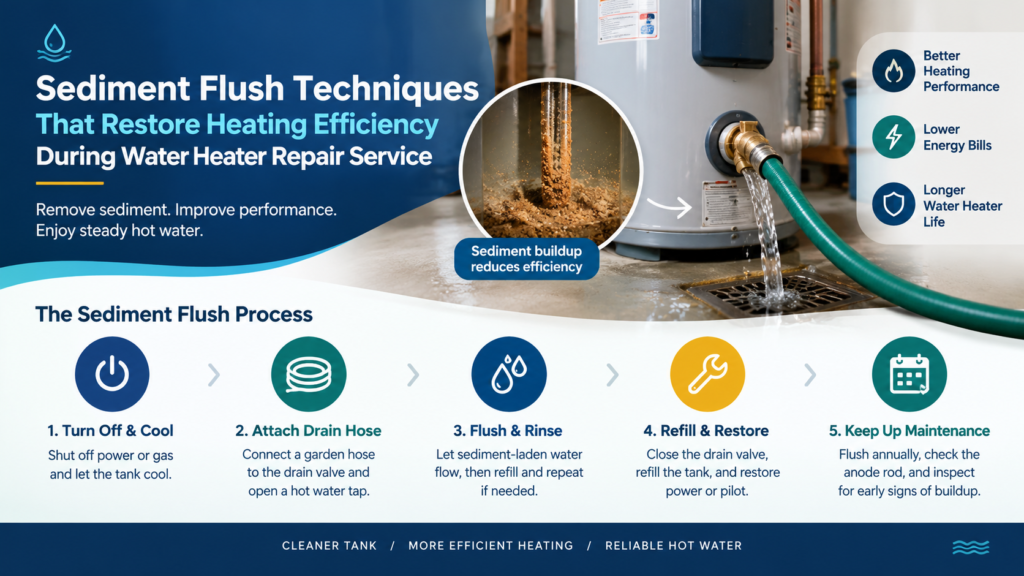
Few homeowners notice the creeping signs of sediment buildup in their water heater until hot showers turn lukewarm or utility bills edge higher each month. One day, the water heater rumbles as it cycles, or rusty water flows from the tap, leaving you uncertain whether a simple fix will restore comfort. Sediment collects as minerals and debris settle at the bottom of the tank, forming a barrier that forces the heating element to work harder. Over time, this not only reduces heating efficiency but also shortens the lifespan of the unit. Flushing techniques tailored to your specific water heater can dissolve these problems quickly, restoring reliable hot water and lowering energy costs.
Common Signs Of Sediment Buildup In Residential Water Heaters
When sediment accumulates in a water heater, several warning signs often appear. Homeowners may first notice a popping or rumbling noise coming from the tank, caused by water trapped beneath layers of mineral deposits that burst as they are heated. Discolored water, particularly a brown or rusty tint, can indicate that rust and scale have mingled with sediment and are now entering your home’s plumbing supply. A sudden drop in available hot water or a noticeable increase in heating time is also common as sediment insulates the heating element from the water it’s trying to warm.
Checking for these issues early can prevent more costly repairs down the line. If sediment buildup is suspected, scheduling a flush water heater sediment service allows professionals to inspect and clean the tank before efficiency drops further. According to sediment removal guidelines, regular assessment of water clarity and heater performance is essential for timely intervention.
Essential Tools Required For Professional Tank Flushing
Effective sediment flush techniques rely on using the right set of tools. A standard procedure for flushing a residential tank involves a garden hose rated for hot water, a flathead screwdriver for opening the drain valve, and a bucket for capturing initial flow and checking for debris. In some cases, a specialized tank flushing pump may be used to agitate and remove stubborn sediment deposits, especially in older heaters where buildup has hardened over time.
Safety equipment is equally important. Work gloves, protective goggles, and a temperature gauge help prevent accidental burns and ensure the tank is cool enough to handle. When dealing with gas-powered water heaters, a gas leak detector can add a layer of safety, especially if the unit must be relit after service. Following industry-recommended flushing procedures ensures the process is both thorough and safe for all types of residential units.
Step By Step Procedure For Effective Sediment Removal
To begin a thorough sediment flush, first shut off power to the water heater—either at the breaker for electric models or by turning the gas control to “pilot” for gas units. Allow the tank to cool before attaching the garden hose to the drain valve at the base of the unit, directing the hose to a floor drain or safe outdoor area. Open a hot water tap elsewhere in the home to relieve pressure, then carefully open the drain valve to let sediment-laden water flow from the tank.
Once drained, briefly turn the cold water supply back on with the drain valve still open, allowing fresh water to stir up and flush out remaining debris. This process may need to be repeated several times for severe buildup. For tanks with persistent or hardened scale, professionals may use a flush water heater sediment service that includes tank agitation or chemical descalers, ensuring all deposits are removed. After flushing, close the drain valve, refill the tank, and restore power or relight the pilot as needed. For households experiencing repeated sediment issues, a Water Heater Repair Service can recommend upgrades or ongoing service plans to keep the system running efficiently. This type of maintenance prevents future breakdowns and maintains steady hot water output.
Preventive Maintenance Practices To Maintain Long Term Heating Efficiency
Once sediment is removed, establishing a routine maintenance schedule helps prevent future buildup. Annual flushing is recommended for most residential water heaters, particularly in areas with hard water. Homeowners can test for early signs of mineral accumulation by draining a gallon of water from the tank every few months and inspecting it for cloudiness or grit. Installing a whole-house water softener, where local water is rich in minerals, also reduces the rate at which sediment forms.
Regular inspections of the water heater’s anode rod—a sacrificial component that attracts corrosive elements—can further extend the lifespan of the tank and reduce rust-related sediment. Proactive care, including periodic checks of the pressure relief valve and thermostat settings, ensures the system operates at peak efficiency year-round. For those wary of handling these steps alone, scheduling a professional flush water heater sediment service ensures the right techniques and products are used for your specific model.
Conclusion
Addressing sediment buildup with targeted flushing techniques restores lost heating efficiency and protects your water heater from premature failure. If your system shows signs of reduced performance or you suspect mineral deposits, scheduling a professional flush is the most reliable way to keep your hot water steady and your energy costs in check.