In the realm of academics the grades play an important part in determining the student’s performance and their success. A common grade metric that students are faced with will be an 18.25-grade that often causes confusion. What is it? What does it mean? How does it compare with other systems of grading? Most importantly is how do students enhance their scores to get higher scores?
In this post this article, we’ll discuss the 18/25 class the way it’s measured, the significance of it and offer practical tips for improving your academic performance.
Also Read: 16/20 Grade
What is the 18/25 Grade?
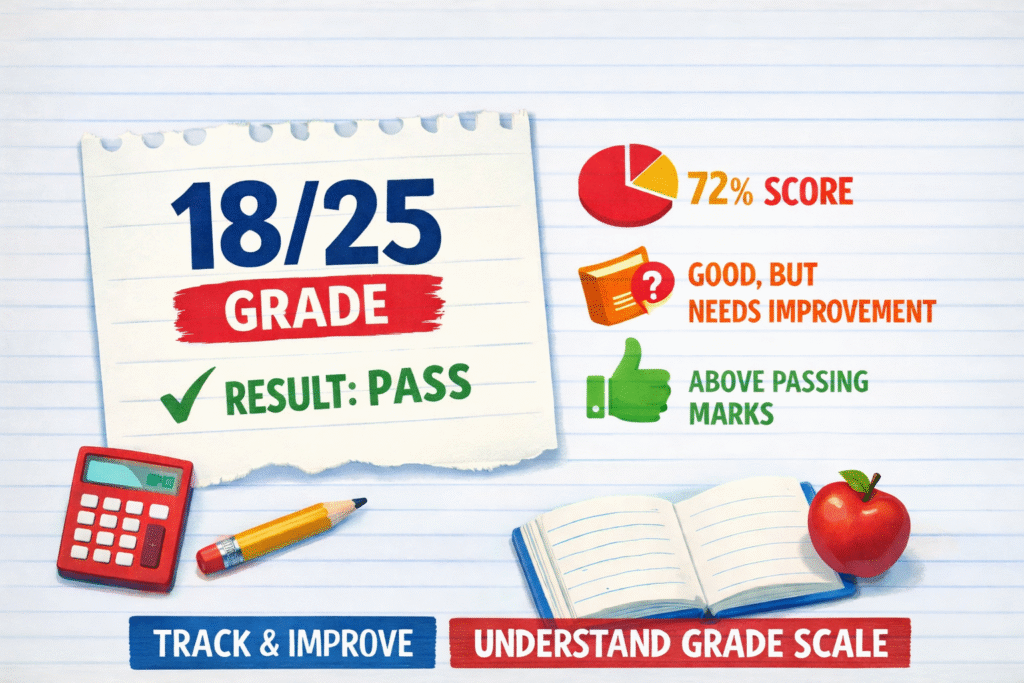
The 18/25 score is a number that refers to a mark of 18/25 for a specific exam or assignment. The scoring system typically utilized in nations in which the score total is in the range of 25 points in contrast to the percentage system or a alphabet grade system.
Examples:
-
If you have scored 18/25 this means that you scored an average of 18 points from an overall 25.
-
To express this as a percentage, you divide 18 by 25 and multiply by 100: 1825×100=72%\frac \times 100 = 72\%2518×100=72%.
Thus, an 18/25 grade is 72 percent that is generally the “C” grade for the majority of grading systems.
Explore More: 11/15 Grade
How Does the 18/25 Grade Compare to Other Grades?
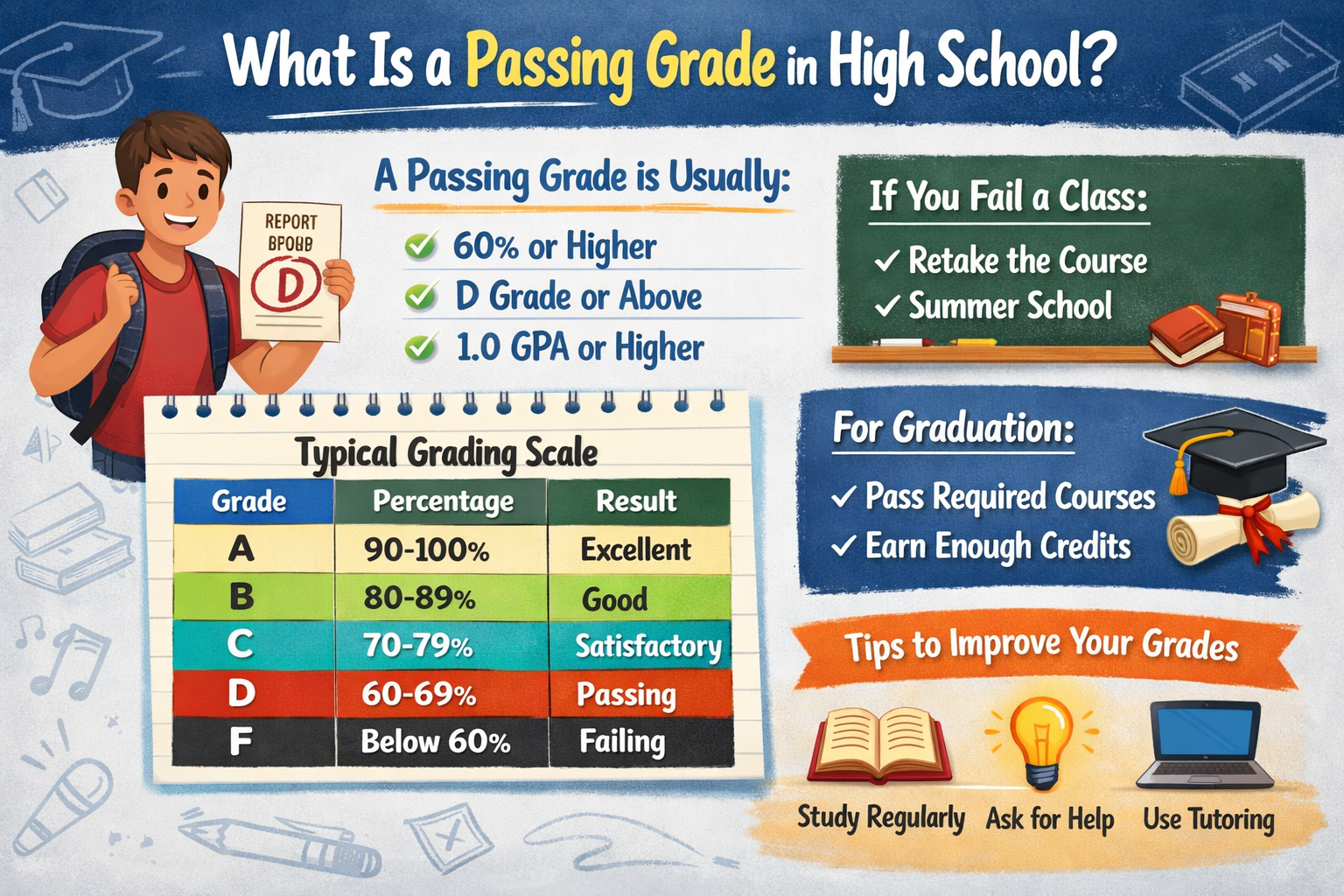
Knowing which the grade of 18/25 is positioned within the larger grades scale is vital for understanding the meaning. This is a quick description of how scores are translated into percentage grades as well as letters grades:
| Score (Out of 25) | Percentage (%) | Letter Grade |
|---|---|---|
| 25/25 | 100% | A+ |
| 22/25 | 88% | A |
| 18/25 | 72% | C |
| 15/25 | 60% | D |
| 10/25 | 40% | F |
You can see that 18/25 (72 percentage) typically falls in the C-level that indicates an average level of level of performance. Although this is a good score however, many students want greater scores, which will result in higher academic grade.
Tips to Improve Your 18/25 Grade
If you’re constantly receiving an 18/25 mark do not fret. This is a standard score and you can always make an opportunity to improve. Here are a few tips to boost your score:
1. Understand the Material Thoroughly
One of the first steps to improve your score is to have an grasp of the subject that is being taught. If you’re getting a score of at or around 72%, this could be a sign of a lack of understanding the matter. Spend the time reading the textbooks you’ve purchased, read the lecture notes and participate with practice exercises to build the foundation you’ve built.
2. Seek Clarification
Are you having difficulty getting a grasp of certain concepts or subject matter you’re struggling with, don’t hesitate to ask to get clarity. Contact your classmate or teacher for aid. Sometimes, the ability to see things from a different perspective may be the answer to understanding an obscure idea.
3. Practice Regularly
for a higher score learning is the most important factor to getting a higher mark. Practice exams and tests or old exams to learn the types of questions you’ll face in the upcoming test. If you continue to practice, you will become greater your ability to respond to the questions quickly and effectively.
4. Improve Time Management
The most common reason why students may not be performing as well can be due to inadequate management of the time they have. If you’re trying to finish your test quickly or not paying attention to questions, learn better strategies for study and testing. Give yourself plenty of time during each test section to ensure that you’re competent to tackle each test in a thoughtful manner. Understand the meaning, percentage, and pass status of an 18/20 grade.
5. Ask for Feedback
After you’ve earned the mark of 18/25 You should go over the details from your teacher or that your teacher has provided. Recognizing the reason you failed to score marks on particular tests may assist you to avoid repeating the same mistakes the next time. Note any observations and make them available for your next test.
6. Stay Consistent
Enhancing your marks is a procedure that takes patience and consistent effort. Create attainable objectives for your study and adhere to the same schedule. A regular studying session, even if it’s shorter, they’re far more effective compared trying to memorize information prior to the test.
Conclusion:
An average score of 18/25 (72 percent) is considered good quality work, but there is always room for improvement. By using a quick grader to track your progress and understanding the grade scale, you can identify where you need to improve. With consistent practice, efficient time management, and a proactive study approach, you can raise your score and reach a higher academic standard. Remember, success in school comes from consistency, smart studying, and seeking help whenever needed.